
Heel spurs can make the first steps in the morning and weight-bearing during the working day or exercise considerably more uncomfortable. The pain is often felt underneath or close to the heel and can vary depending on how much weight is put on the foot. What is commonly called heel spurs is often associated with irritation of the tissue underneath the foot. Advice therefore rarely focuses on complete rest, but rather on avoiding things that continue to irritate the area.
Explore supports and cushioning for heel spurs
Avoid exercising through clear pain
It is easy to think that your heel needs to get used to the activity, especially if you regularly run, walk long distances or exercise several times a week. But activity that causes a clear increase in pain during the session or worse symptoms afterwards may mean that the load is too great for now.
Running, jumping and quick changes of direction often place considerable strain on the foot. You do not necessarily need to stop all activity, but avoid continuing at the same level when your heel reacts. This also applies to dancing, ball sports and other activities involving hard landings.
Pay particular attention to how your heel feels later that day and the following morning. If an activity makes those first steps noticeably more painful, it may be a sign that the amount, pace or surface needs adjusting.

Do not go straight from high activity to complete rest
Complete rest for a prolonged period is rarely an obvious first choice for load-related symptoms. If you stop using your foot altogether, returning to work, walking and exercise may become unnecessarily difficult. At the same time, you should not stick to your usual routine simply to avoid taking a break.
Instead, try to find a level of movement that does not cause a sharp increase in pain. Shorter distances, a slower pace and more breaks may be more appropriate than a long walk. If your job is physically demanding, temporary changes to your tasks may be more realistic than complete rest.
Pain is individual, and no single level of activity suits everyone. A physiotherapist can help assess how much activity is appropriate for your symptoms and everyday life.
Avoid worn-out shoes and sudden changes
Shoes that are worn down, unstable or uncomfortable can make it harder to relieve pressure on an irritated heel. Avoid continuing to wear a pair that has clearly lost its shape or puts pressure on the tender area. Very thin insoles and walking barefoot on hard floors can also be uncomfortable when your heel is sensitive.
A sudden switch to completely different shoes is not always straightforward either. If your foot is used to a particular type of shoe, a major change can affect the load. Introduce new shoes gradually and notice how your heel responds.
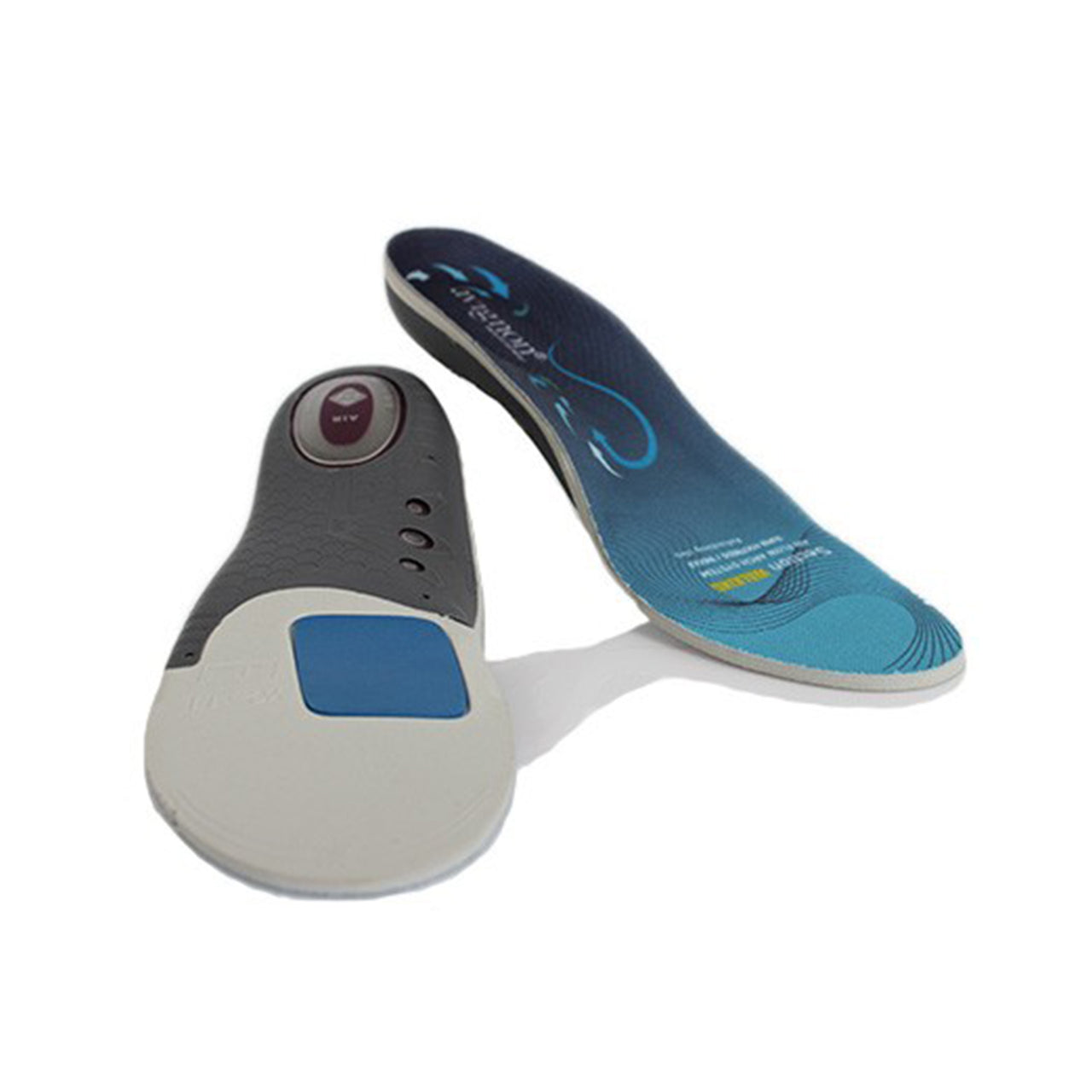
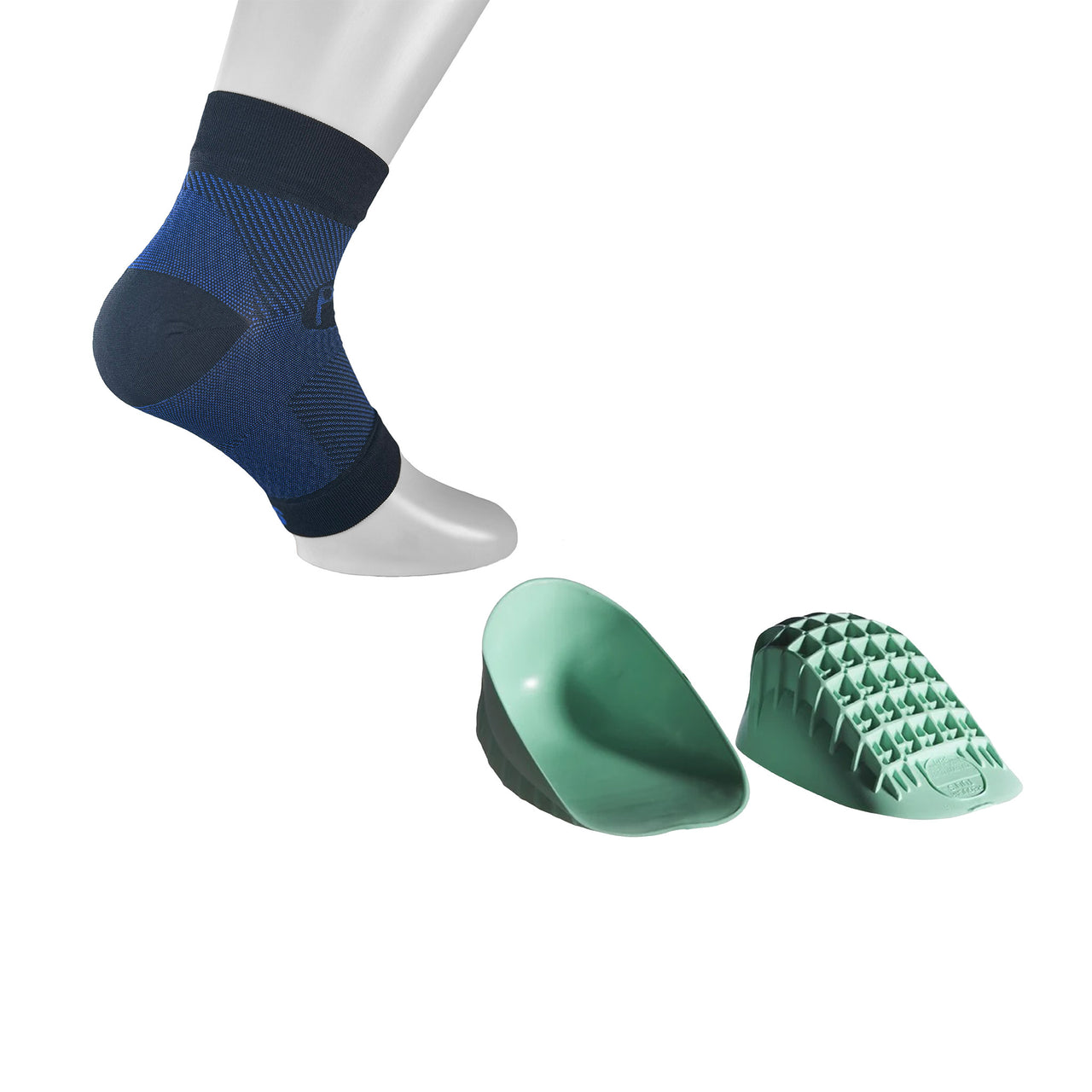
The same applies to supports. A heel cup surrounds the heel and cushions the impact of each step, while an insole with arch support distributes the load over a larger area of the foot. Both take up space in the shoe, so check that they fit without pushing your foot upwards. Also avoid using an insert that is too hard or too small for the shoe, as this can shift pressure elsewhere.
Do not try to force the pain away
Firm massage directly on the most tender point or intense stretching that provokes pain is not the same as rehabilitation. Avoid movements that cause sharp or increasing pain. A mild stretching sensation may be acceptable, but exercises should not be based on the idea that more pain brings better results.
Also be careful about starting several new measures at once. If you change shoes, start using inserts, adjust your training volume and add several exercises at the same time, it becomes difficult to understand what your heel is responding to. Instead, change one thing at a time and monitor how things develop in everyday life, at work and during exercise.
Do not wait too long to have the pain assessed
Not all heel pain is caused by heel spurs. Avoid diagnosing yourself based solely on where it hurts. Seek medical advice if the pain started after a clear injury, if you cannot bear weight on the foot or if the heel is severely swollen or red. Fever, numbness and rapidly worsening symptoms should also be assessed.
Contact a physiotherapist or another healthcare professional if the pain persists despite reducing the load that provokes your symptoms. The assessment needs to consider when the pain occurs, which activities affect it and whether the symptoms change the way you walk. If you start limping, other parts of your body may also be exposed to unfamiliar strain, especially during long working days or when returning to exercise.
If you are unsure which support suits your foot and shoes, you can get personalised advice from our licensed physiotherapist here at Rehaboteket.